
 English
 Español
 Pусский
 Français
 Deutsch
 العربية
 ไทย
ไทย Türk dili
 Tiếng Việt


Controle remoto de código aberto
Open source remote control refers to software and hardware solutions that allow users to remotely operate devices or systems while being built on publicly accessible and modifiable code. Unlike proprietary alternatives, open source remote control solutions provide transparency, customization, and community-driven development, making them popular among developers, hobbyists, and organizations seeking flexible and cost-effective solutions. Key Features of Open Source Remote Control 1. Transparency and Security – Since the source code is openly available, users can audit it for vulnerabilities, ensuring greater trust and security compared to closed-source alternatives. 2. Customization – Developers can modify the software to fit specific needs, whether for home automation, robotics, or industrial applications. 3. Cross-Platform Compatibility – Many open source remote control tools support multiple operating systems (Linux, Windows, macOS, Android) and protocols (SSH, VNC, RDP, MQTT). 4. Community Support – Active communities contribute to improvements, provide troubleshooting help, and develop plugins or extensions. 5. Cost-Effectiveness – Most open source solutions are free, reducing expenses for individuals and businesses. Common Use Cases - Home Automation – Controlling smart devices (lights, thermostats, cameras) via open source platforms. - IT Administration – Remote server management using tools like SSH or web-based dashboards. - Robotics & Drones – Customizing control interfaces for DIY robotics projects. - Industrial IoT – Monitoring and controlling machinery in manufacturing environments. Popular Open Source Remote Control Tools - Remote Desktop Solutions – Tools like VNC-compatible servers or RDP alternatives allow graphical remote access. - SSH & CLI Tools – Secure Shell (SSH) remains a standard for command-line remote control. - MQTT & Home Assistant – Used for IoT device control with lightweight messaging protocols. - Custom API-Based Solutions – Some projects provide APIs for integrating remote control into applications. Challenges While open source remote control offers many advantages, challenges include: - Complexity for Non-Technical Users – Some tools require coding knowledge for setup. - Fragmentation – Multiple competing standards can create compatibility issues. - Maintenance Risks – If a project loses community support, updates may stop. Conclusion Open source remote control empowers users with freedom, security, and adaptability. Whether for personal projects or enterprise applications, these solutions provide a viable alternative to proprietary systems, fostering innovation through collaboration. As technology evolves, open source remote control will likely play an even bigger role in automation, IoT, and remote management.
Produto
Categoria:
-
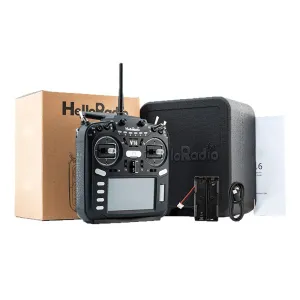
Controle remoto de drone de código aberto
Sua classificação: Acessórios para dronesVistas: 597Número:Tempo de liberação: 2023-04-20 16:46:29O transmissor de rádio 4 em 1 V16R ELRS possui módulo ELRS de 1 W integrado, gimbals de metal CNC RDC90, tela sensível ao toque de 4,3 "" e frequência de 2,4 GHz. Compatível com drones de corrida FPV, drones FPV de fibra de carbono e receptores ELRS convencionais, oferece potência ajustável de 1000mW, assistente de voz AI e 4 opções de cores. Ideal para pilotos competitivos que buscam controle estável e preciso.Visão geral do produtoProjetado para corridas FPV e operações profissionais de drones, o transmissor de rádio 4 em 1 V16R ELRS oferece controle ultraconfiável e de alta precisão. Como a...
Notícias
Categoria:
Nenhum resultado de pesquisa!
Caso
Categoria:
Nenhum resultado de pesquisa!
Vídeo
Categoria:
Nenhum resultado de pesquisa!
Download
Categoria:
Nenhum resultado de pesquisa!
Recrutamento
Categoria:
Nenhum resultado de pesquisa!
Produtos recomendados
Nenhum resultado de pesquisa!



 Telefone